
Together time
A memory-box date night with 12 journal prompts
A calm at-home activity for choosing one shared memory, telling both sides, and making a small keepsake together.
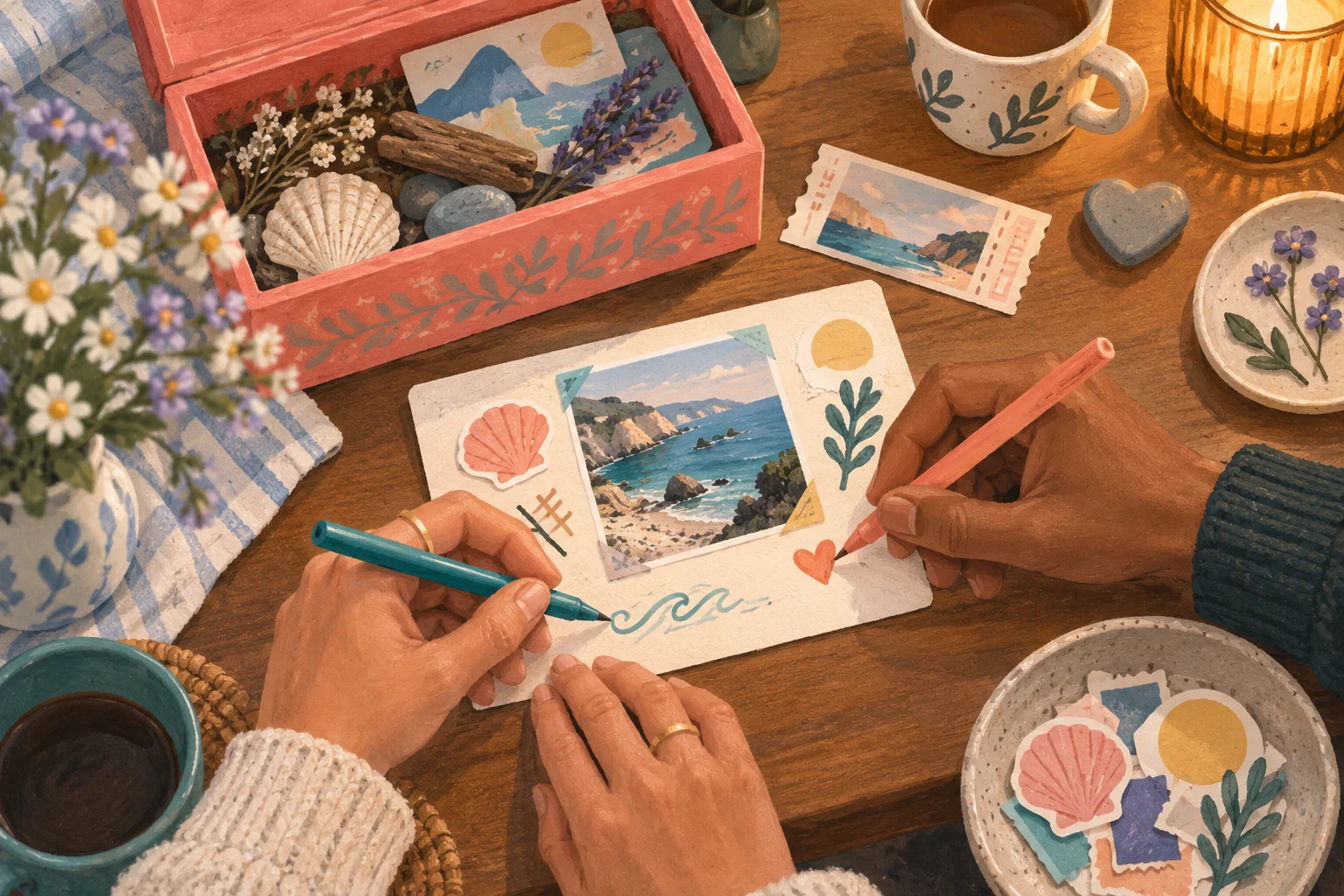
Turn one memory into the whole date
This at-home date uses a few photographs or ordinary objects to revisit one shared moment without trying to summarize your entire relationship. You will each choose an item, answer a handful of prompts, listen to the other version, and make one small memory card to keep. Plan for about 45 minutes, but the activity still works if you stop after 20.
The goal is not to test whether your recollections match. Two people often notice different details in the same scene. Treat those differences as extra material for the story, not evidence that one person remembered it correctly. Either person can skip a prompt or choose a lighter memory.
Gather a tiny, low-pressure box
Bring three to five items in total: a printed photo, ticket, receipt, postcard, small souvenir, or a digital image on a device. They do not need to mark major milestones. A bus ticket from an ordinary afternoon can lead to a better conversation than a formal anniversary photograph.
Add two sheets of paper, two pens, and an envelope or small box for the finished card. If you use original family photographs or papers, prepare a clean, clear surface and keep food and drinks away. The U.S. National Archives gives additional handling guidance for older or delicate originals; a copy or a screen image is the simpler choice when an item is fragile.
Set the rules before choosing
Agree on three boundaries: how long you have, whether either person may pass without explaining, and whether the final card stays private. Put phones on quiet except for the device holding a photo. Choose memories that both people can discuss comfortably tonight.
Make the activity collaborative rather than evaluative. There is no score, and there are no correct answers. Do not turn a forgotten detail into a quiz. If a prompt brings up a disagreement that needs more time, write a neutral note such as “talk about this another day” and return to the activity only if you both want to.
Choose the first memory
Spread out the items or scroll slowly through a small, preselected album. Each person silently picks one candidate. If you choose different memories, flip a coin for which one goes first and save the other for another evening. If you choose the same one, notice why it stood out to each of you.
Place the selected item between you. Spend one quiet minute observing it before telling the story. Look for background details, weather, clothing, sounds, food, a route you took, or something just outside the frame.
Use these 12 couples journal prompts
Write brief answers separately. The prompts are: What happened just before this moment? What tiny detail do you notice first? What could a stranger misunderstand from the image or object? What were you looking forward to? What felt ordinary then but meaningful now? What made you laugh? What did the other person do that you appreciated? What sensory detail can you recall? What was happening outside the frame? What would you tell your earlier selves? Which part would you gladly repeat? What title would you give this memory?
Pick four to six prompts rather than rushing through all twelve. One sentence per answer is enough. If writing feels formal, record short voice notes or take turns answering aloud. The structure should support the evening, not become homework.
Share in two uninterrupted rounds
Person A reads or tells their answers while Person B listens without correcting details. Then switch. After both rounds, ask only curious questions: “What made that stand out?” or “What do you remember next?” Avoid questions designed to prove a point.
Now name one detail you learned from the other person and one detail you both remembered. The most useful outcome may be a new angle on a familiar moment, not a perfectly merged account.
Make one intentional memory card
On a fresh card, write the memory title, an approximate date or season, where it happened, one detail from each person, and one sentence beginning “We want to remember…” Add a small sketch or attach a copy of the image if you like. Both people can sign with initials, names, or a tiny symbol.
For a digital version, use a clear file name and add basic information about who, what, where, and when. The National Archives recommends basic metadata so files can be identified later, and it advises keeping backups of important digital files. You do not need an elaborate archive for tonight; simply decide where this one card or file will live.
Close with a five-minute next step
Choose one small action connected to the memory: recreate the snack, revisit the neighborhood, call someone who was there, print the photo, or schedule another memory-box evening. Make the action optional and specific enough that either person can complete it.
Then put the remaining items away. Ending after one memory keeps the activity from turning into a long sorting project. If the evening felt good, add one new card each month and let the collection grow slowly.
How this connects to Little Together
Little Together is being built around care, a home, a garden, and memories that you intentionally choose to save. The current prototype keeps those memories locally and uses simulated partner perspectives while we test the shape of the experience. Remote shared care, accounts, and invitations are planned, not available today.
There is no app or play link yet; access is coming soon. Until then, a paper envelope or a folder you already use can hold the memory you made tonight.
A little more to explore
Together timeTogether time · 18 Oct 2026
Paint one shared scene on two canvases
A practical 75-minute painting date using one shared palette, two adjoining pictures, and a no-critique reveal.
A little read ↗Together timeTogether time · 17 Oct 2026
Plan a quiet reading date with one shared bookmark
A practical 60-minute reading date with two short reading rounds, gentle conversation prompts, and one keepsake bookmark.
A little read ↗