
Together time
Build a one-room museum date at home
A practical 60-minute museum date using open online collections, two mini exhibitions, and one shared postcard.
Turn an online collection into a date
This museum date happens at home or over a call. Each person becomes the curator of a tiny three-work exhibition, gives the other a short tour, and helps make one shared postcard at the end. Allow about 60 minutes and use a laptop, tablet, or any screen you can view comfortably.
You do not need art-history knowledge or matching tastes. The activity works because two people choose, arrange, and explain what catches their attention. The collection supplies the material; your decisions make the date.
Choose one museum before the date
Pick a museum with a searchable online collection and clear object pages. The Metropolitan Museum of Art and the National Gallery of Art are useful starting points because both provide large online collections and identify open-access images. The Met says its Open Access program makes public-domain artwork images and collection data available for unrestricted use, while the National Gallery provides downloadable open-access images directly from eligible object pages.
Use one museum for the whole activity so you spend the evening looking rather than comparing websites. You can browse on separate devices in the same room or share links in a call. If an object page is slow or unavailable, move on without turning the date into technical support.
Pick a playful exhibition prompt
Choose one prompt together: A Garden for a Tiny Pet, Things That Look Like Rain, Three Excellent Chairs, A Room for Midnight, Objects With Secret Jobs, or Colors We Would Put in a Kitchen. The prompt is imaginary; it does not claim that the museum classifies the works this way.
Set a ten-minute timer. Each person privately finds three works that fit the prompt in any medium: painting, photograph, textile, sculpture, furniture, print, or decorative object. Save the three object-page links rather than downloading files you do not need.
Look first and read second
When choosing a work, spend one quiet minute with the image before reading the museum label. Notice shape, color, scale clues, material, and one detail you would point out to the other person. Then read the title, creator information, date, culture, medium, and museum notes that are available.
Keep observation and museum information separate when you speak. Say “I notice…” for what you can see and “The museum record says…” for catalog information. This makes room for a personal response without presenting a guess as historical fact.
Arrange your one-room exhibition
Put your three links in an intentional order. The first work should invite the visitor in, the second should complicate the theme, and the third should make a satisfying exit. Give the exhibition a title of no more than seven words.
Write one sentence for the entrance label: “In this room, we are looking for…” Then give each work a short placement note, such as “beside the doorway,” “low enough for our imaginary pet to inspect,” or “alone on the far wall.” You are designing a fictional room, not describing the museum’s real display.
Give two five-minute tours
Person A shares the first work and gives the tour in order. For each selection, explain what caught your eye, one verified detail from the object page, and why it belongs in that position. Person B can ask one question before moving to the next work. Then switch roles.
Do not rank the exhibitions. Instead, name one connection you noticed between the two sets and one choice that surprised you. If you selected the same work, compare the different reasons it entered each room.
Make one shared gallery wall
Choose one work from each exhibition and place the two links side by side in a note or message. Add a third empty position and decide together what kind of work would complete the wall: a quiet landscape, a bright textile, a useful object, or something with an animal.
Search for that final work together for no more than five minutes. One person controls the search while the other supplies terms. Stop at the first choice you both want to discuss; the exercise is about a shared decision, not finding the theoretically perfect artwork.
Create a postcard without copying carelessly
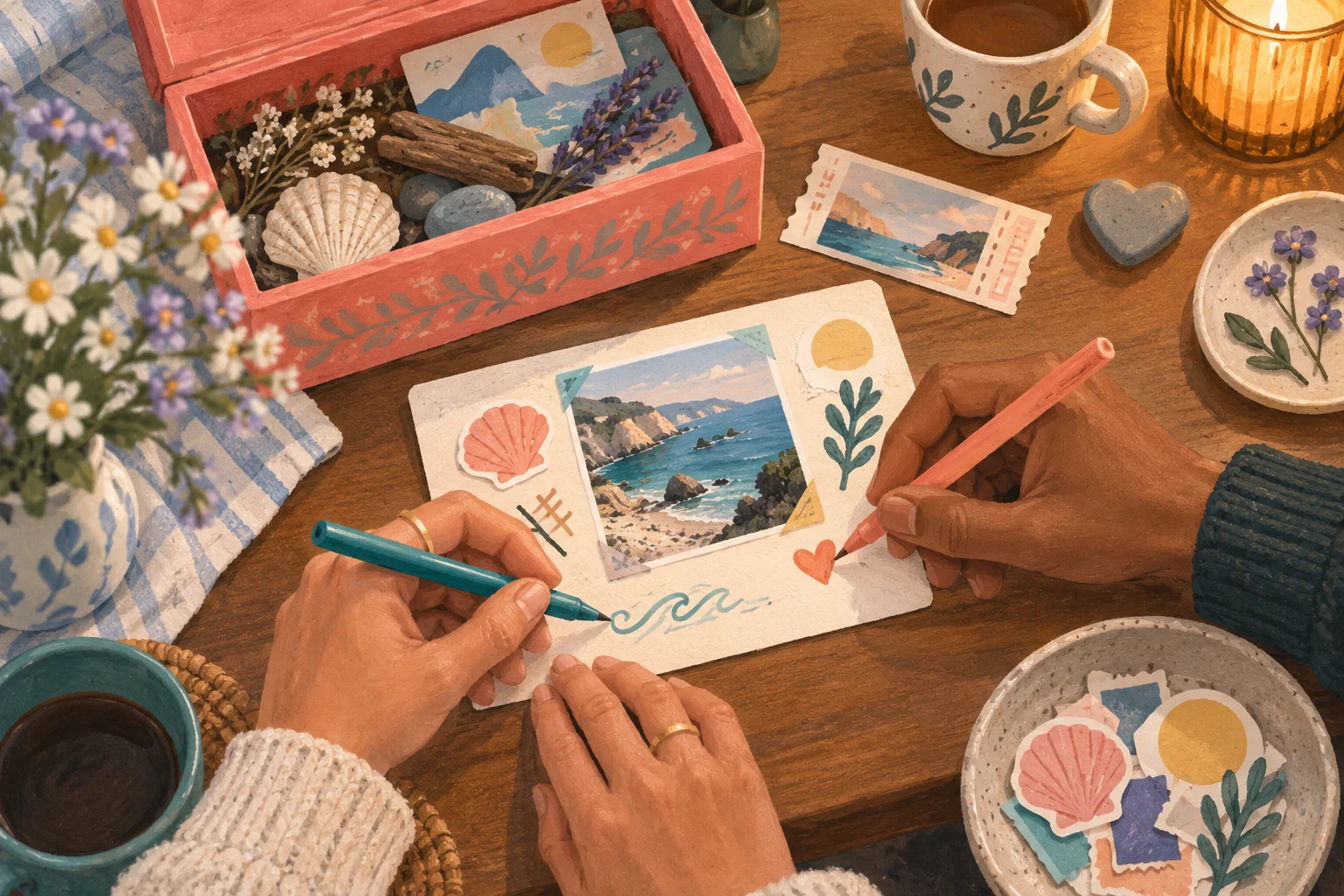
Write a four-line postcard from your imaginary exhibition: the room’s title, the three works by title, one detail you want to remember, and “Wish you were here” addressed to your future selves. A text-only postcard is enough.
If you want to add an artwork image, use only an image clearly marked for open access on its museum page and keep the museum’s title, creator, and credit information with it. The museum’s current rights statement on the object page should guide any download or reuse.
Adapt it for different energy levels
For a 20-minute version, choose one work each and skip the shared search. For a screen-free ending, close the devices and sketch the imaginary room from memory. For a long-distance date, send only the first object link at the start of each tour so the remaining choices stay surprising.
Either person can pass on an image or topic without explaining. Online collections can include difficult, explicit, or culturally sensitive material. If a search result changes the mood, return to the prompt or choose a different department.
A small bridge to Little Together
Little Together is being built around a virtual pet home, garden, everyday care, and intentional memories. A future evening in that world might involve arranging a room or choosing what deserves a place, but no museum feature is being announced here.
The current prototype saves locally and uses simulated partner perspectives. Remote care, accounts, and invitations are planned. App, download, and play access are still coming soon, so tonight’s exhibition lives in the links and postcard you make together.
A little more to explore
 Together time
Together time · 18 Oct 2026
Paint one shared scene on two canvases
A practical 75-minute painting date using one shared palette, two adjoining pictures, and a no-critique reveal.
A little read ↗Together timeTogether time · 17 Oct 2026
Plan a quiet reading date with one shared bookmark
A practical 60-minute reading date with two short reading rounds, gentle conversation prompts, and one keepsake bookmark.
A little read ↗